A Booking Page Solves One Step. A Website Solves the Decision
Booking links are useful once someone is ready. A simple website helps people get ready in the first place.

Booking pages are good at one thing.
They turn intent into a scheduled time.
That is important.
But they usually assume the customer is already convinced.
Ready-to-book is not the same as first-time visitor
If someone already knows the business, a booking page is enough.
If they are discovering it for the first time, it often is not.
A booking interface answers:
- What times are available?
- Which service slot should I pick?
It usually does not answer:
- What makes this business worth choosing?
- What should I expect?
- Is this the right fit for me?
- Is this place trustworthy?
Most local businesses need both
This is not really booking page versus website.
It is more about sequence.
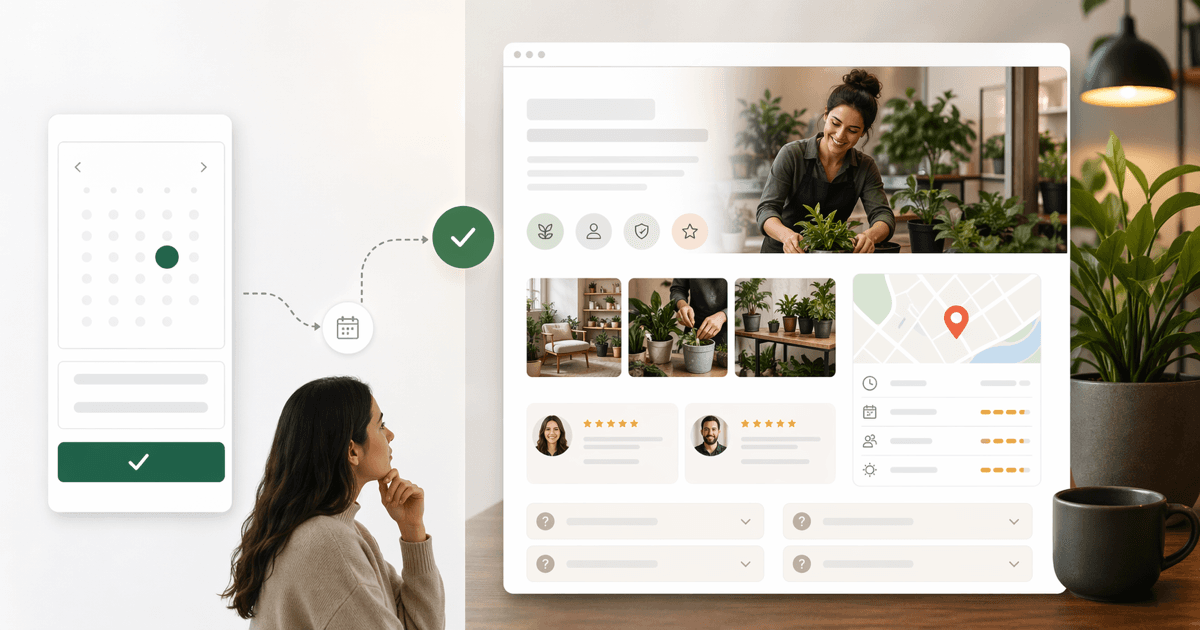
The website helps someone understand and trust the business.
The booking page helps them act on that decision.
When the first step is missing, the second step has to work too hard.
What a simple decision page should do
Before you ask someone to book, it helps to give them:
- A plain-language summary of the service
- Photos or examples
- Pricing cues or package context
- Location and business details
- A clear next step that can lead into booking
For restaurants, that next step might be a reservation.
For salons, it might be a service menu.
For freelancers, it might be an inquiry form or call link.
Why this matters
Small businesses do not always lose customers because the service is weak.
Sometimes they lose them because the path from discovery to action is fragmented.
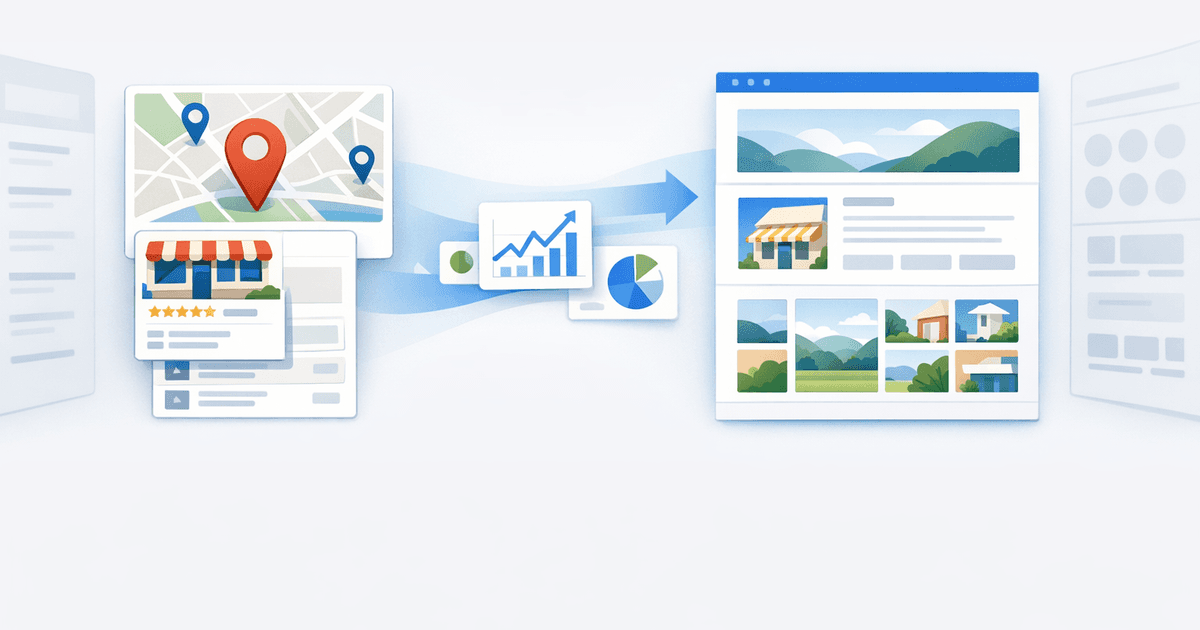
People bounce between Maps, Instagram, and a booking tool, trying to build confidence on their own.
A single landing page can connect those pieces.
That is one of the clearest use cases we see for Place2Page.