Place2Page vs Wix, WordPress, and Linktree
Place2Page is built for local landing pages that start from Maps data, not for replacing every website builder or link hub.

Most local businesses do not wake up needing a whole website platform.
They need one clear page that helps a customer decide.
That difference matters when you compare Place2Page with tools like Wix, WordPress, and Linktree.
Wix and WordPress can build broad websites.
Linktree can create a link hub quickly.
Place2Page is narrower by design: it starts from a supported Google Maps or Naver Map URL and turns available listing data into a hosted local landing page.
The real comparison is the starting point
A blank website builder starts with a canvas.
A link hub starts with destinations.
Place2Page starts with the local business data that already exists: name, location, hours, photos, and review signals when available.
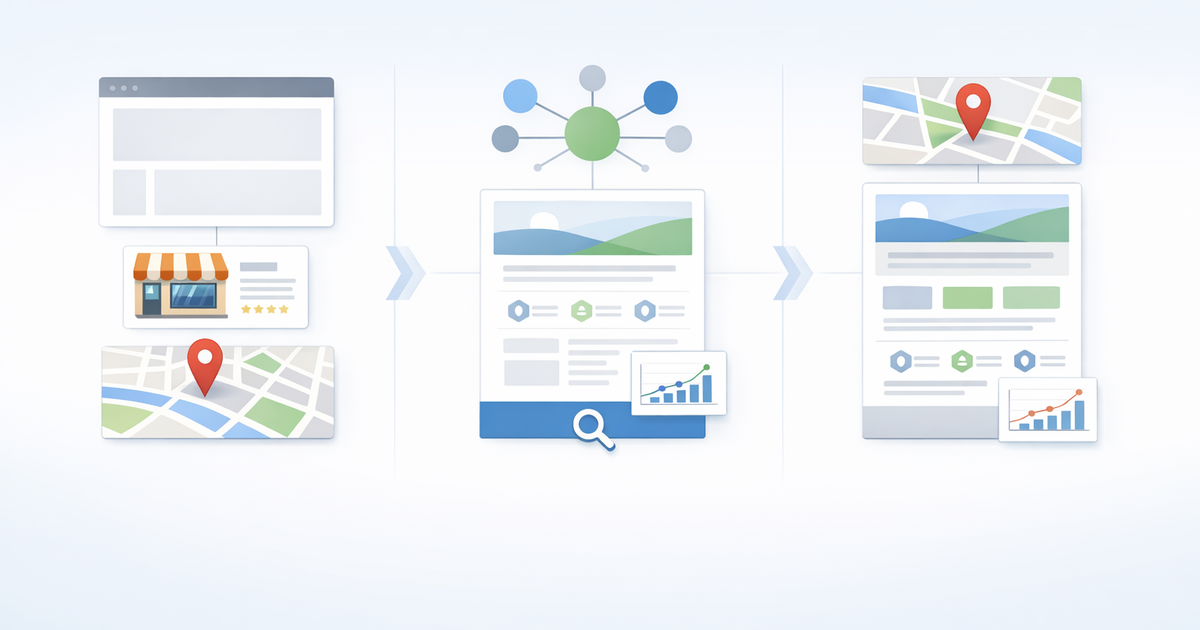
That starting point changes the workflow.
Instead of asking a busy owner to plan a site structure from scratch, Place2Page creates a focused first draft around the business and the next action a customer should take.
Where each tool fits
| Job | Better fit |
|---|---|
| Build a full multi-page site with deep customization | Wix or WordPress |
| Put several links behind one profile URL | Linktree |
| Turn a Maps listing into a hosted local landing page | Place2Page |
This is not about claiming one category beats the others.
It is about choosing the right tool for the job.
If the business needs a full site, a broad website builder makes sense.
If the business needs a link-in-bio hub, a link tool is usually enough.
If the business needs a search-readable local page that can explain the store, show proof, and point to booking, calling, or visiting, Place2Page is the focused option.
The SEO claim should stay specific
The useful SEO baseline is not magic.
It is structure.
Published Place2Page pages are normalized with canonical URL handling, site-name metadata, and WebSite JSON-LD. The generated page itself is built around crawlable local sections instead of only a stack of outgoing links.
That does not guarantee rankings.
It does mean the page has a clearer structure for search engines and customers to read.
The Google Search Console export through April 24, 2026 showed 7,171 total impressions, 87 total clicks, and a 4.87 average position across tracked pages in the previous three months.
Customer subdomains in that export accounted for 7,086 impressions and 56 clicks.
Those numbers are evidence that published Place2Page pages can create real search traffic. They are not a promise that every future page will rank the same way.
Why we made this public
Positioning only helps if it is precise.
Place2Page should not sound like a generic website builder.
It should be clear about the job it handles best:
- Start from Maps data.
- Draft a local landing page quickly.
- Publish it with hosting included.
- Give the owner visit and interaction data after launch.
That is the comparison we want customers to understand before they choose a tool.
You can see the public comparison page here: Place2Page vs Wix, WordPress, and Linktree.